
Inside the roots and rhythm of InfoBloom
It began as a quiet response to noisy information spaces. The work is shaped by a belief that learning can feel humane, spacious, and deeply practical. This page gathers the story, the principles, and the craft choices that guide every sentence on the site.
A project that grew from quiet frustration
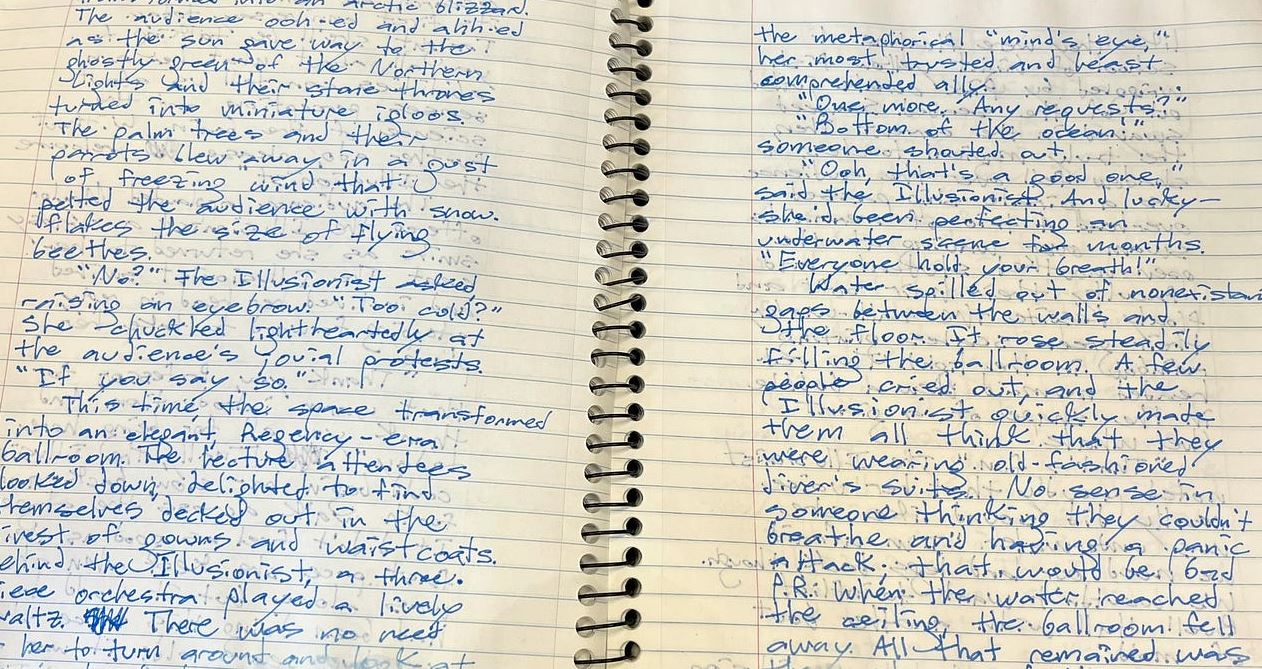
It did not begin as a polished brand. It started as a set of notebooks and half finished drafts written by someone who loved learning but felt drained by the way information was often presented online.
For a long time, the person behind the work moved through the same cycle many readers know well. A new question would appear, curiosity would spark, and the natural next step would be a search through articles, videos, and fast moving commentary. Often that search led to pages crowded with flashing elements, harsh headlines, or language that assumed a relentless drive for optimization. Even when the core facts were solid, the surrounding tone left a lingering sense of fatigue. It was as if every topic had been turned into a competition, where the goal was to outpace everyone else rather than to understand oneself more clearly. Over time, that environment made it harder to listen to quieter questions, the ones that sit underneath the surface of daily life.
While moving through this pattern, the creator noticed something important. The moments that actually shifted behavior rarely came from loud content. Instead, they came from slower forms of communication. A conversation with a thoughtful friend. A single paragraph in a long book that named an experience with unusual precision. A small diagram drawn in the margins of a notebook while trying to make sense of a difficult season. These experiences were simple, yet they offered a kind of clarity that stuck around. The idea grew from a wish to bring that same feeling into a digital space. If a corner of the web could feel like a familiar notebook shared between friends, perhaps more people could access that kind of grounded insight without needing to search for hours.
The first experiments were modest. The creator began drafting essays that spoke directly to one imagined reader at a time instead of aiming for a huge audience. The language was deliberately plain. Technical terms appeared only when they were needed and were wrapped in analogies drawn from everyday life. The intention was to lower the emotional barrier to entry so that someone could arrive tired, overwhelmed, or unsure and still feel able to follow along. As these drafts accumulated, a pattern emerged. Many of the topics overlapped. They touched on attention, rest, digital wellbeing, values, and relationships. Rather than separating them, the writer decided to organize them into a single living library. That library eventually became the site you are reading now.
The purpose of this quiet online garden
It exists to support people who care about learning, yet do not want their lives taken over by the pressure to constantly upgrade, optimize, and broadcast their progress.
The purpose of the project is deceptively simple. It aims to give you language, structure, and companionship for the questions that sit at the intersection of work, creativity, health, and relationships. Those questions rarely fit into neat categories. They show up late at night when your mind replays the day, or early in the morning when you feel a tug to live differently but cannot quite name what needs to change. Many traditional self help spaces answer those questions with tight formulas and urgent calls to action. In contrast, this work chooses a slower path. It offers detailed explanations, grounded stories, and adaptable tools that you can fold into your existing routines without tearing your life apart.
At the heart of the site lies a belief that you are not broken for feeling tired, uncertain, or behind. You are a human being living in a complex world that often makes conflicting demands. When you read here, you are not treated as a machine that simply needs better input. You are treated as someone whose inner life matters just as much as outward productivity. That framing shapes everything from the topics that appear to the pacing of each paragraph. Rather than promising dramatic overnight change, it invites you to see yourself more clearly, make one small adjustment at a time, and notice how your relationship with learning shifts across seasons.
This purpose extends into the way the site is structured. Guides are created for moments when you need concrete direction. Learning paths support longer journeys that stretch across weeks. Resources gather small frameworks you can reuse, like weekly reflection questions or gentle planning prompts. Stories explore how all of this plays out in lived experience. The Practice Journal section encourages you to take these ideas off the screen and into your own notebooks. Together, these pieces form a set of companions rather than a set of commands. They are here so that when life becomes tangled, you have a place to sit quietly, sort through the threads, and leave with at least one next step that feels honest.
How the editorial voice is shaped and refined
The tone is intentional. It is crafted to feel patient, clear, and unhurried, even when the subject matter is complex or emotionally charged.
Every article begins with a question. What might this topic feel like from the inside. Before any structure is drafted, the writer spends time picturing a reader in a specific situation. Perhaps they are sitting at a cluttered kitchen table after a long day, scrolling slowly because they do not have energy for much more. Perhaps they have just finished a demanding project and are wondering why they feel empty rather than proud. Holding that scene in mind influences word choice, metaphors, and pacing. Sentences lean toward clarity rather than cleverness. Abrupt shifts are softened with small bridges, and each section ends with a sense of closure before the next begins. This care is meant to reduce the cognitive load on the reader so that more energy is available for reflection.
The editorial voice also makes deliberate space for uncertainty. It recognizes that research evolves, that cultural context matters, and that personal experience is always partial. When a suggestion is grounded in studies, the writing explains the idea in plain language without hiding behind jargon. When a practice comes more from lived experience, that is named openly. Instead of presenting advice as a universal rule, the article invites you to treat it as a hypothesis to test in your specific life. Phrases that sound absolute are avoided. Nuance is not seen as a weakness. It is treated as a sign of respect for your ability to think and choose for yourself.
Refining this voice is an ongoing process. Drafts are often much rougher than what you see on the page. They may begin with bullet point lists, scattered phrases, or fragments of conversations. During revision, the writer looks for places where a reader might feel judged, rushed, or overlooked. Those sections are gently reworked until the tone matches the values of the project. Particular attention is given to moments when sensitive topics like burnout, grief, or anxiety appear. The goal is to describe these experiences with honesty while avoiding sensationalism or romanticizing. By the time an article appears on the site, it has moved through several rounds of softening and clarifying so that the final version feels like a calm voice in a noisy room.
The kinds of topics this work embraces
It focuses on subjects that sit where practical and emotional life overlap, drawing threads between concentration, rest, technology, relationships, and meaning.
Some pieces address very tangible situations, such as taming scattered digital files, designing a workday that includes pockets of restoration, or making sense of a long list of obligations. Others look at internal landscapes, like the quiet shame that can arise when rest feels undeserved, or the tension between wanting to be helpful and needing to protect personal energy. Many topics blend both external and internal dimensions. A guide about clearing your physical workspace might also explore the stories you hold about productivity. A reflection on social media might talk about attention, community, and loneliness all at once. This mingling is deliberate. It reflects the reality that rarely does a problem show up in only one area of life.
When deciding which subjects to cover, the project leans toward themes that recur across conversations with different kinds of people. If a challenge shows up for students, caregivers, remote workers, and artists in different forms, it signals that there is a shared pattern worth exploring. It looks for those patterns and then searches for language that ties them together without flattening the details. The aim is for readers from varied backgrounds to see parts of their own story reflected, even if the specific examples do not match exactly. To support that, many articles describe multiple characters or scenes instead of focusing on a single archetype.
The site also makes space for topics that are often treated as side notes in traditional productivity or learning advice. Feelings like grief, boredom, and quiet joy receive attention alongside more familiar themes like focus and planning. Rather than being pushed to the margins, they are seen as signals that can guide choices. For example, an article may explore how boredom can be a doorway to deeper curiosity when it is not immediately filled with distraction. Another piece might look at how joy can be used as a compass for sustainable effort. By acknowledging the full range of inner experience, this work treats emotional life as a vital part of wisdom rather than as noise that should be silenced.
Design decisions that support thoughtful reading
The visual and interaction design is intentionally simple. Every choice, from color to motion, is meant to keep your attention available for the content itself.
The color palette stays close to teal and green, echoing the theme of growth without shouting. These hues are paired with clear neutrals so that text remains easy to read on different screens. Soft coral accents appear in small doses to highlight important elements, like navigation and subtle callouts, rather than painting entire sections. Shadows and rounded corners are used sparingly to suggest depth without clutter. The overall effect is meant to evoke a feeling of walking through a bright, tidy room where your eyes know where to rest. Nothing jumps unexpectedly, yet there is enough variation to prevent the layout from feeling flat.
Motion on the site is almost always functional. A reading progress bar at the top of the page lets you sense how far you have traveled through a piece without needing to scroll up and down repeatedly. Section headers gain a gentle line when they enter view, helping you understand the structure of a long article at a glance. Cards that hold side notes or small rituals rise slightly when you hover over them, signalling that they can be engaged with more closely. All of these effects respect system preferences for reduced motion, which means they quiet themselves if your device is set to limit animation. The intention is to support, never to distract.
Even protective features are designed with care. The script that limits copying, printing shortcuts, and certain developer tools might feel unusual at first. It is not there because the ideas are fragile. Rather, it is meant to invite a different kind of relationship with the material. When copying text is less convenient, you are more likely to stay with the page long enough to see what it stirs in you. Instead of building a personal archive of fragments pulled from many places, you are encouraged to translate ideas into your own words in a journal or notebook. This gentle friction supports deeper integration. By the time you close an article, you are more likely to remember how it felt and what it changed inside you, not just the exact way a sentence was phrased.
How the project plans to grow with its readers
A project about learning cannot remain static. It is built to evolve as new questions appear, as research shifts, and as readers share their experiences.
Future growth will not focus on becoming the largest possible library. Instead, the emphasis is on becoming a more useful one. New guides will emerge in response to patterns that keep surfacing in conversations and messages. If many readers describe similar struggles with boundaries around technology, for example, that cluster of experiences may become a seed for a new learning path or a set of resources. When research in fields like psychology, education, or human computer interaction reveals insights that feel relevant, those findings will be translated into approachable language and woven into existing pieces or used to shape new ones.
Feedback from readers plays a quiet but significant role in this process. When someone writes to say that a particular section felt confusing, harsh, or incomplete, that note becomes an invitation to review and revise. When people share stories about how they have adapted a tool or reframed an idea, those accounts help refine future explanations. This does not mean that every message leads to immediate change. It means that the project listens. Over time, listening helps the site stay rooted in lived experience instead of drifting into abstraction. In that sense, it is less like a finished book and more like a garden journal that is updated season by season.
The person behind the work also continues to learn, both formally and informally. New interests will occasionally bring fresh topics into the ecosystem, and personal experiences will naturally color which questions receive the most attention at a given time. The commitment is to remain transparent about these influences, to acknowledge limits, and to keep centering the needs of readers who arrive tired, hopeful, or cautiously curious. As long as those readers exist, there will be a reason to keep tending this small, thoughtful corner of the web.